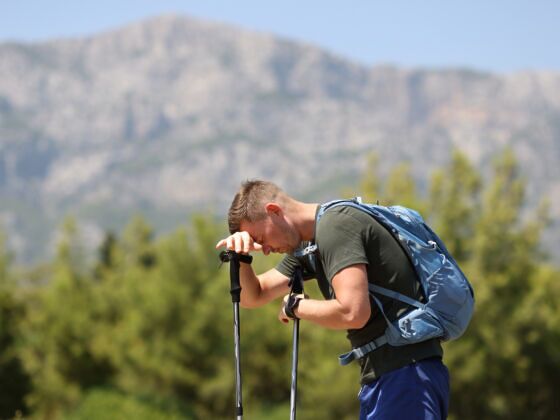
10 Essential Items For Backcountry Travel

06/10/09  Print This Post Print This Post    1 Comment   Popular   Written by Eric Warren
  • Stumble It
Former Summit Steward of Alpine Meadows, Shannon Belt, highlights the essentials you need to enjoy the backcountry and avoid becoming a statistic.
1. Map and compass

Even for day hikes, a good map and compass can save your life when weather or trails deteriorate in the backcountry. “They’re light and if you don’t bring them, you know you’ll need them,” Belt says. He also stresses that knowing how to use them is just as important as keeping them with you.

Your local gear shop should be able to hook you up with a compass. Good topographical maps are available from the Forest Service and gear shops in the town nearest the trails you plan on exploring.

2. Plenty of water and water filter/purifier

“If you don’t know why you need this, you should seriously question why you’re heading into the backcountry,” Belt says. “It’s also a good idea to carry some way of getting more water, whether for one day or a week.” Several companies offer either filters or purification tablets.

Tablets are great in a pinch or if you’re going ultra-light, but filters are the top choice for keeping the crystal taste in that clear mountain stream.

Photo by trekkyandy

3. Food

This is the heaviest thing you’ll be carrying, but it’s one of the most important.

“I always take more than I think I’ll need,” Belt says. “I’d rather bring some home than go hungry.”

4. Clothing

Layer up.

No matter which season it is, weather can change quickly in the backcountry. Bring plenty of non-cotton layers to make sure your body heat is regulated.

One of the most overlooked pieces of equipment is a good rain jacket. Belt says that soft shells and wind-breakers are nice during a shower or when it gets windy but only a good rain jacket will keep you dry and warm during a downpour.

Belt also suggests that sunglasses find their way into your pack. “Depending on the conditions, they can save your eyes from lasting damage.”

5. Fifty feet of light duty rope, plus a couple of carabiners

Belt emphasizes the utility of rope and carbiners in the backcountry. “It’s essential for most stream-crossings, belaying down or up steep scrambles and tying up food from animals.”

He adds that rope comes in handy for making a sling for an injured arm or a fashionable and functional belt.

6. Whistle

Whistles are great for scaring bears and mountain lions away as well as alerting rescue crews to your exact location.

They also work to scare and annoy your camping buddies when necessary.

solar blanket photo

Photo by A.A.

7. Emergency blanket

This light-weight item, also known as a solar blanket, can be found at most gear shops for a few dollars.

The shiny material is excellent for reflecting your body heat back onto you, keeping you warm in desperate situations.

Belt notes it can also be used as a giant reflector to signal search pilots.

8. Paper notebook and pencil

According to Belt, “paper is good for both emergency and pleasure. You can write a note to other hikers or rangers and you can use the paper to start fires.

“It’s nice to have, to draw or write thoughts about the day.” You’ll wish you had it if you’re stuck in the tent on a rainy day.

happy hikers photo

Photo bydolfindans

9. Camera

Bringing home photos of your backpacking trip will keep the memories of finding that secret waterfall fresh in your mind. It will also get your friends stoked on donning their own backpacks and joining you for your next trip.

From cheap, light-weight point-and-shoots to pro-level SLRs, there are dozens of different cameras on the market.

Consider one of the many waterproof models to beat bad weather and maybe catch a picture under the surface of your favorite fishing hole.

10. Positive attitude

Belt is adamant about bringing along a positive attitude. “A negative attitude [in the backcountry] is your worst enemy.”

Backcountry experts often site instances where fatal mistakes were fueled by anger, frustration and fear. “You need to be able to make good decisions. Your life could depend on it.”

Community Connection

Thinking of heading out camping in the backcountry but don’t know how to start? Check out the piece, How to Get Started Backpacking. There’s also a free book up for grabs.


  • Stumble It

About the Author

Matador ID: advenjunkie

Frequent Matador Contributor Eric Warren has lived various Montana locales including Missoula, Big Sky, Bozeman, and Billings, for 25 years.

1 Comment... join the discussion!

  • Ryukyu Mike replied on June 17, 2009

    Really excellent article. The only thing I could think of adding is a cellular phone with built in GPS and maybe a solar or wind-powered charger !

    (Report comment)

    ↵ Reply

Leave a Comment

Jump To Category:


Explore the Community


Latest Community Blogs

  • Seattle weather is lovely in its violent, messy unpredictability.  Everything happens all at once and then can be s...
    » posted on 5 November 2009
  • So, I've been procrastinating about blogging this one.  I don't know if anyone's keeping up but it saddens me at le...
    » posted on 6 November 2009
  • South African born Kate Berrisford, a law and environmental management masters graduate, who has several years of experi...
    » posted on 6 November 2009

Popular Stories on Matador

12 Personal Travel Websites That Will Make You Quit Your Day Job

... 

10 Traveler's Tips For Rocking A Nudist Beach

Travelers tend to enjoy ultimate freedom on the road, t... 

10 Volunteer Opportunities For Free Travel

From assisting with disaster relief to helping on the A... 

The 50 Greatest Campfire Songs Of All Time

... 

The A-B-C-D-E of Travel Photography

Action, Balance, Composition, Depth of Field, Evocation... 

10 Things to do in Amsterdam BESIDES Smoking Pot

There's more to Amsterdam than legal bud.... 


Focus


Editor Blogs