Feature photo by Ken@Okinawa. Photo above by Ed Yourdon
For the majority of musicians, making music keeps us sane and grounded. Music is an extension of who we are, an aspect of our personality. Too long without music and we end up like my poor houseplants – wilted and ready to die.
Unfortunately, most instruments don’t lend themselves to travel, especially if you’re trying to keep your pack weight low. Imagine schlepping your backpack along for a mile in the rain to board a crowded train.
Now imagine doing that while carrying an acoustic guitar.
Photo by Photomish Dan
Maybe, like me, your main instruments are bass or piano. Or, maybe the thought of even letting the airlines look at your guitar gives you nightmares.
If you choose to leave your primary instrument at home, you will need to learn a new, smaller instrument for travel. Choosing a new instrument to learn is not a choice to be made lightly.
To become even mediocre will take hours and hours of practice, but this time investment will pay great dividends when you find that perfect spot for an impromptu concert.
Plus, learning to play well is a matter of common courtesy. Have you ever heard a poorly played violin? Did it remind you of a dying marmot?
In the following list, I’ve tried to avoid miniature travel versions of real instruments. With the exception of the Martin Backpacker, these are all ‘real’ instruments. For those who can sing, the first seven instruments on the list are good for accompaniment. All others are solo instruments.
Finally, in an effort to improve the quality of sleep for hostel guests around the world, I have omitted djembes and other hand drums.
Guitar
If you really have to take a guitar, the Martin Backpacker has a decent sound, a low price, and plays well. If you’re really brave, you could always take your chances with hostel guitars.
Mandolin
Mandolins require a little more care than some of the others, especially to maintain decent tuning, but gives you a good range and the ability to make chords. . Not the best choice if you have small fingers.
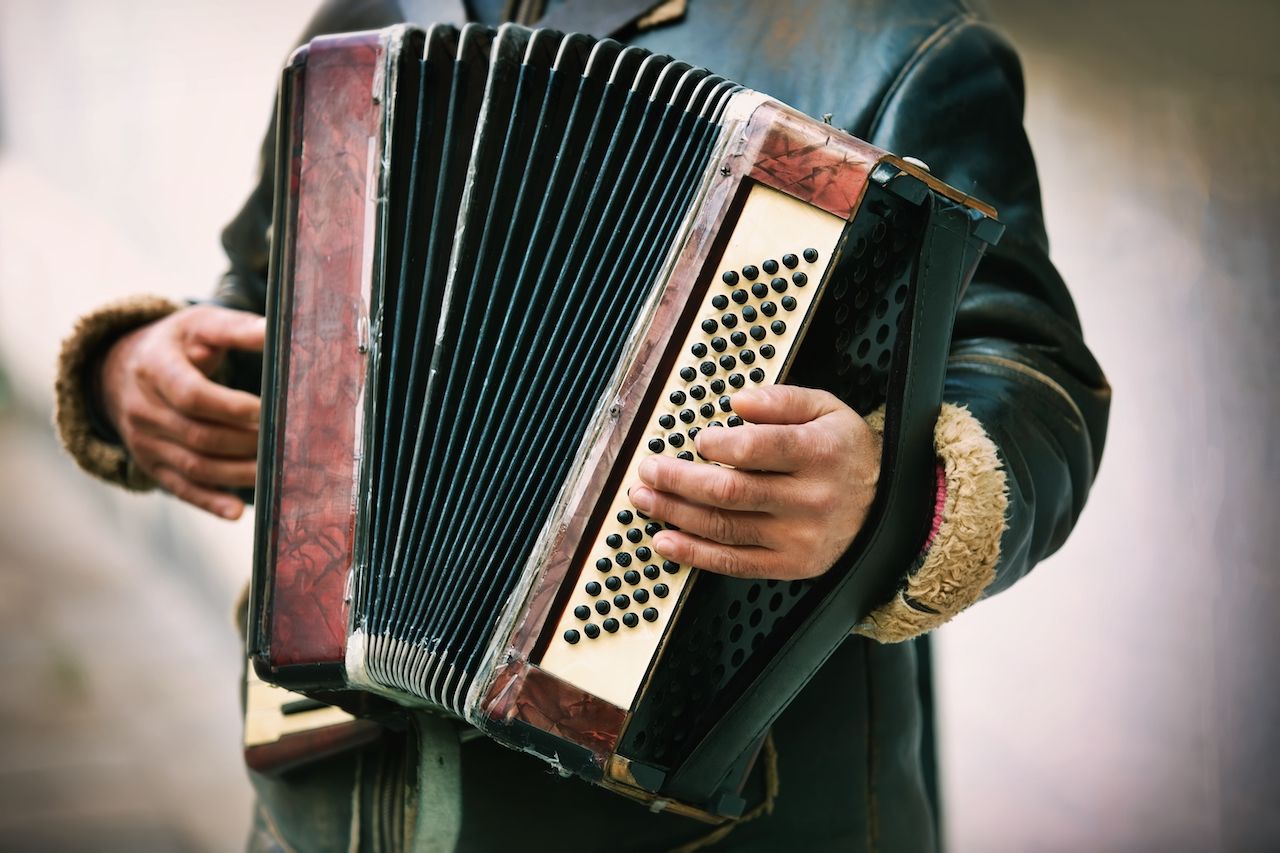
Accordion
These come in several shapes and sizes, and it’s possible to find small models of reasonable quality.
Autoharp
A unique, folksy instrument, the autoharp allows you to play a melody over chords while singing. Like a zither but easier to play because of the chord buttons.
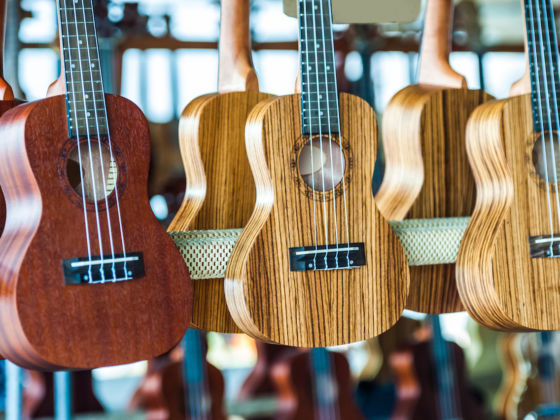
Ukulele
Another good accompaniment instrument. Cheap and versatile, but can’t match the mandolin in terms of sound quality and resonance.
Violin/Fiddle
Possibly the most difficult and expressive instrument on the list. If you can play violin well, you already know how awesome your instrument is.
Erhu
The Erhu is a two string Chinese violin. This delicate instrument requires a hell of an ear but wins hand down for uniqueness. With the right case (think hard foam padding), this could be a remarkable travel instrument.
Recorders
You probably learned to play one of these in school. What this instrument lacks in range it makes up for in low-weight quirkiness.
Clarinet
Not the lightest or easiest instrument on the list, but definitely the dorkiest. Conveniently breaks down into a small package. Pads and reeds could pose a problem, especially in subtropical zones.
Flute
A pretty instrument, difficult to play well, but a little easier to play than the clarinet. Like the clarinet, pads will require extra care. As a bonus you can play along with Jethro Tull covers.
Harmonica
The harmonica is almost a travel cliché. Lightweight, cheap, durable, and reasonably easy to play. Unfortunately, anyone you play with is limited to whatever key your harp happens to be in.
Ocarina
An instrument so light and smooth it can be worn as a necklace. Against all conventions of fashion, people do just this. Cheap and easy to play, but limited in range.
Bonus Instrument – Your Own Mouth
You’re already carrying your own mouth with you, why not use it? The most lightweight instrument of all, you can both whistle and sing.
If this is going to be your main instrument, learn some songs. Pop songs, folk songs, and Irish airs are a good place to start.
Over to you. What kind of instruments have you seen or taken on your travels?
Community Connection
For more on traveling as a musician, check out Essential Gear for the Traveling Musician and 5 Things You Should Know When Traveling With Musical Instruments.
About the Author
Related Posts
8 Comments... join the discussion!
-
-
Great list! To represent the Southern (US) contingency, I would add the banjo to that list too.
↵ -
Good post!
I bought a harmonica about a year ago, and play now and then while I’m at home, Great instrument, but too bad that you need to be preeetty good before you can play together with other instruments.
↵ -
Nice list. For the record, the mini Martin sounds surprisingly full, almost like a full size guitar. I have a slightly smaller Washburn travel guitar but it sounds a bit more tinny than the Martin, and it’s a bit quieter.
In Vietnam I picked up a dan moi. This is a cool little instrument. If you use your imagination it sounds a little like a dijeridoo.
Also, add shakers to your list!! Everyone loves shakers.
↵ -
@Michelle. Yeah, I was at a party a little over a year ago and, having had a few drinks, I decided I would show off my djembe skills. I thought I was great, and so did the neighbors: they sent the police to tell me how much they enjoyed my performance.
@Nancy. I wanted to include the banjo, but it’s kind of heavy. Would certainly be a unique instrument almost anywhere in the world.
@Ben. Harp is a lot of fun, but I could figure out the note bends.
@Carlo. Thanks for the recommendation on the dan moi. I should be in Vietnam soon, so I’ll keep my eye out for one.
↵ -
Thanks for your list. I consider buying an Ocarina.
↵ -
I am music loving person and I always travel with my guitar as without it I feel alone.
↵